
When you walk into a modern kitchen today, especially in thoughtfully designed homes or boutique-style spaces, you may notice something different about the walls. They are not flat or overly polished. Instead, they carry a soft texture and depth that changes with light.
In kitchen design, materials play a bigger role than ever. Homeowners are moving away from sterile, glossy surfaces and looking for warmth and character. This is where Italian wall finishes stand out. They bring subtle texture and a natural feel that standard paint cannot replicate.
These finishes have existed for centuries. In traditional Italian homes, walls were treated almost like artwork. Today, that same idea is being adapted to modern kitchens where practicality matters just as much as appearance.
What Makes These Finishes Different in a Kitchen Setting
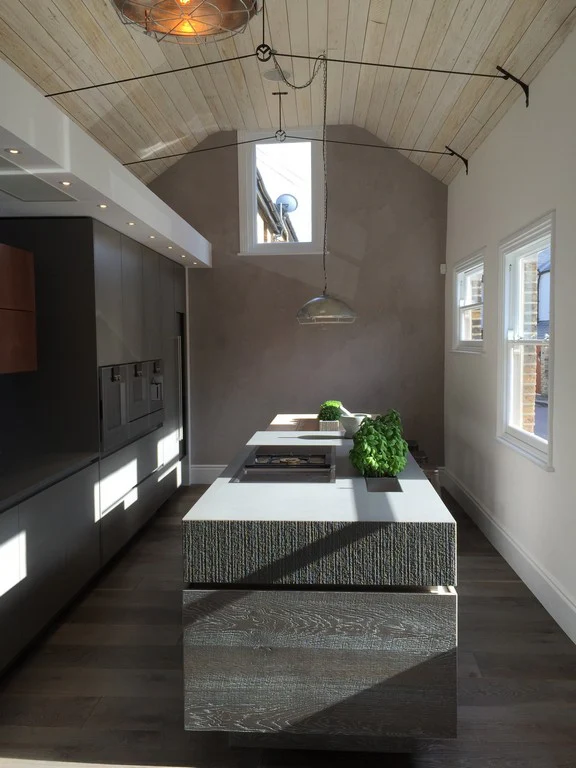
Unlike paint, Italian wall finishes are applied in layers. Each layer is worked by hand, creating depth and texture that cannot be replicated mechanically. In a kitchen, this layered structure does more than improve appearance.
Many of these finishes are made from lime and marble dust. This gives walls a natural look but also improves performance. Lime-based plasters are breathable, meaning they allow moisture to pass through rather than trapping it. That matters in kitchens, where steam and condensation are common.
Another key difference is variation. No two walls will ever look identical. Even with the same colour, slight tonal shifts appear depending on lighting and application. In a kitchen, this prevents surfaces from feeling flat or overly uniform.
Why Texture Works Better in Everyday Kitchen Use
Kitchens are active spaces. Light changes constantly throughout the day, from bright morning sun to artificial lighting in the evening. Flat painted walls reflect light evenly, which can make the space feel harsh or clinical.
Textured finishes behave differently. Light moves across the surface, creating small variations that soften the overall feel of the room. This becomes especially noticeable in kitchens with neutral palettes.
There are also practical advantages. Lime-based finishes can slightly soften sound, reducing echo in kitchens filled with hard surfaces like tiles, countertops, and appliances.
Over time, many people find that kitchens feel calmer and more balanced when walls are not perfectly flat.
Popular Styles That Work Well in Kitchens
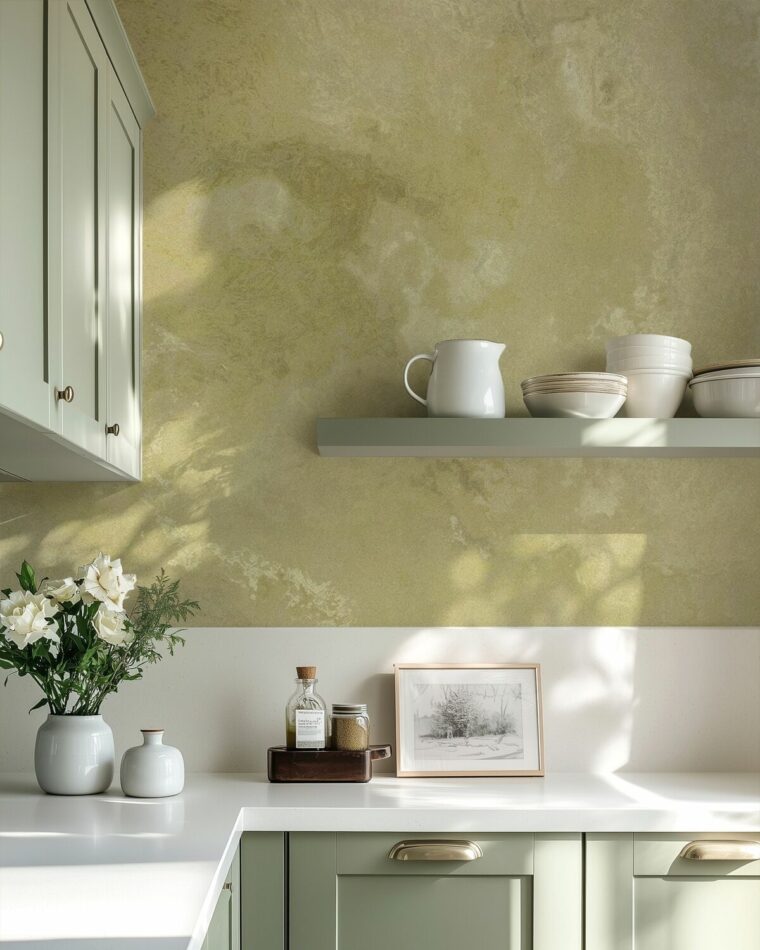
Certain Italian finishes adapt particularly well to kitchen environments:
- Venetian plaster creates a smooth, polished surface that reflects light, making smaller kitchens feel brighter
- Marmorino offers a softer, matte texture that works well in larger or open-plan kitchens
- Limewash gives a more natural, cloud-like appearance that suits rustic or modern organic designs
Modern variations also include subtle tones such as warm greys, off-whites, and muted greens. These colours pair well with cabinets, stone countertops, and wood finishes commonly used in kitchens.
Key Differences Between Common Finishes
Before choosing a finish for a kitchen, it helps to understand how they perform in real conditions:
- Venetian plaster reflects more light, making it suitable for darker kitchens that need brightness without gloss paint
- Marmorino hides small wall imperfections better due to its slightly textured surface
- Limewash creates movement and variation, which can soften rigid kitchen layouts
- Polished finishes usually require sealing, especially near cooking areas or sinks
These differences become more noticeable in kitchens than in other rooms because of lighting changes, humidity, and daily use.
Where to Use Italian Finishes in the Kitchen
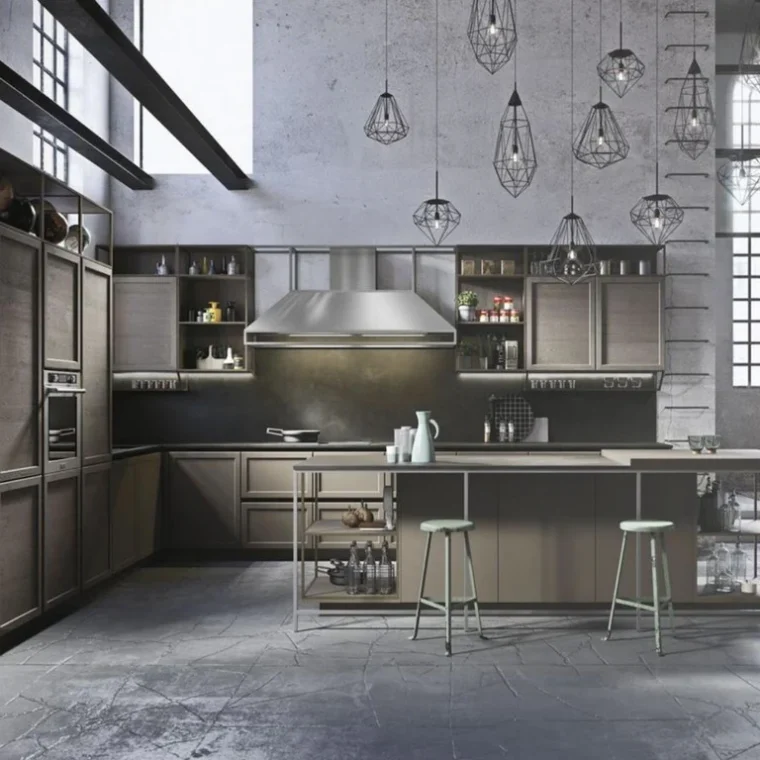
Italian wall finishes do not have to cover every wall to make an impact. Strategic placement often works better.
Feature walls are a common choice, especially behind dining areas or open shelving. They can also be used on kitchen islands or vertical surfaces that are not directly exposed to heavy splashes.
In areas close to stoves or sinks, sealing is important. Many lime-based finishes can be made water-resistant, making them suitable for kitchens when properly protected.
Lighting also plays a major role. Natural light highlights texture, while softer lighting creates a more blended, subtle effect.
Performance Benefits Beyond Appearance
A common assumption is that these finishes are purely decorative. In kitchens, their functional benefits are just as important.
Lime-based plasters regulate humidity by allowing moisture to move through walls rather than becoming trapped. This helps reduce condensation and mould risk, which is particularly useful in cooking spaces.
They also create seamless surfaces without grout lines, which improves hygiene and makes cleaning easier compared to tiled walls.
Additional advantages include:
- Natural resistance to bacteria and mould due to the alkalinity of lime
- Durability that allows surfaces to age gradually rather than chip like paint
- Lower environmental impact since materials are mineral-based and non-toxic
These factors make them a practical option, not just a design feature.
Things to Know Before Choosing Them for a Kitchen
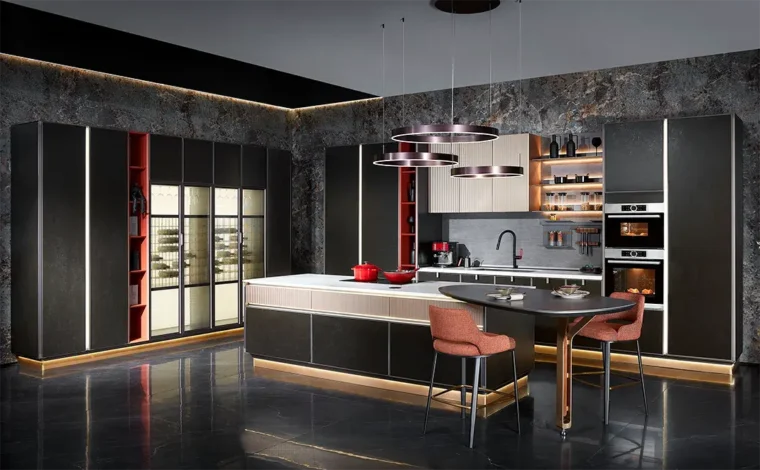
Italian wall finishes require skilled application. They are not suitable for quick DIY projects. The layering process takes time and precision, especially in a kitchen where surfaces must remain consistent.
They are also more expensive than standard paint. However, they tend to last longer and can be repaired locally without repainting entire walls.
Maintenance is straightforward but different. Harsh cleaning chemicals should be avoided. A soft cloth and mild cleaning solution are usually enough for everyday marks.
For kitchens where durability, hygiene, and visual depth all matter, these finishes offer a balanced solution.
Frequently Asked Questions
- Can Italian wall finishes replace tiles in kitchens?
In many cases, yes. Seamless lime-based plasters can be used instead of tiles, especially when sealed properly. They are easier to clean because there are no grout lines.
- Are they safe around cooking areas?
Yes, when sealed correctly. Some finishes are designed to resist stains and moisture, making them suitable near cooktops.
- Do they require frequent maintenance?
No. They generally need less maintenance than painted walls. Occasional cleaning and minor touch-ups are usually enough.
- Will they handle humidity from cooking?
Yes. Their breathable structure allows moisture to pass through walls, reducing condensation buildup.
- Are they suitable for small kitchens?
Yes. Finishes like Venetian plaster can reflect light and make smaller kitchens feel more open.
Final perspective
Italian wall finishes bring something kitchens often lack, depth, texture, and a more natural visual balance.
Beyond appearance, they solve practical challenges related to moisture, hygiene, and durability.
When applied correctly, they offer a long-term upgrade that fits both modern and traditional kitchen designs.